Robert Kime, RIP
7 February 1946 - 17 August 2022
“The house always has the last word. But I always have the first word”- RK

In his own collected home, decades of collecting, discovery, and history combined. His approach to decorating was not something one had a formula to follow. His emphasis was on that which brought one joy and comfort. Nothing was too precious that it could not be enjoyed or used, even if only for display. In his own collections, he held the objects with affection and his pleasure at having found the pieces was genuine. Each had a story, a history unto itself and to him personally.


"My philosophy around collecting is simply being open and interested; it happens very much in the moment and without a lot of second guessing. In my own flat, I have things around me that I have collected over the years or quite recently - and they all say something to me, I suppose. Putting the rooms together and moving things about is done more by intuition than by plan and the things I collect become a part of the story, the fabric of the rooms, which are not based on a system of perfection, but on liveability and comfort. You might have something modest next to something grand, each collected, but together they say something special. I like that. That has never changed for me."- RK

Kime researched, recreated, and reinterpreted textiles. His fabrics reflected history and the present. He brought together the patterns and the colors and the craftsmanship of old for the new market.


"Collecting is, as always, about surrounding yourself with things that you love; things that somehow speak to you. This is my very simple way of thinking and talking about living and putting rooms together and about collecting too. I can see myself in what I collect. And I think if you look at what you buy, it tells you who you are. That is what collecting is to me – it confirms who I am. It tells my story."- RK


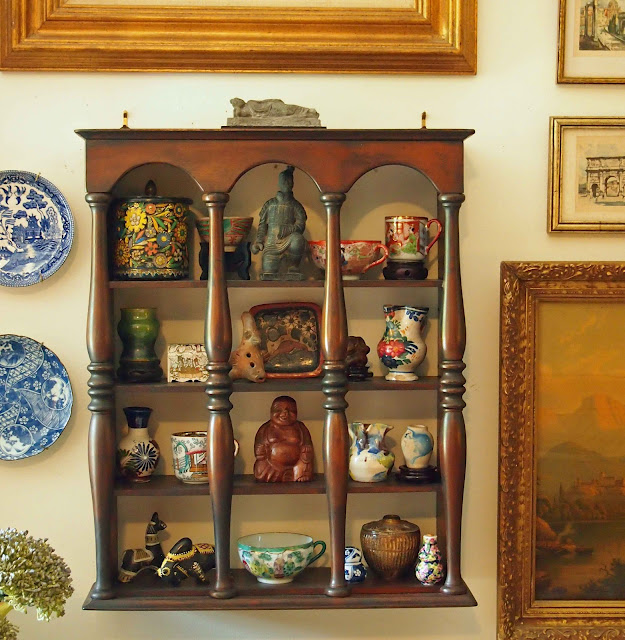
Vignettes make a space. They should be able to stand alone, separate from the space, yet work towards the overall feel of the room.


"Robert Kime, uniquely among decorators, has risen to eminence in the profession via antique dealing, textile collecting and an abiding passion for putting rooms together. His three strands of expertise run side by side as he creates decorating schemes for an illustrious, discreet and world-wide clientele."
Sourced here